Want to be in the loop?
subscribe to
our notification
Business News
DEADLINES TO ISSUE GUIDELINES ON THE IMPLEMENTATION OF THE NEW ENTERPRISE AND INVESTMENT LAWS
Although both of these key pieces of legislation became valid on 1 July of this year, actual implementation has been delayed, as the guiding laws have not yet been issued.
The Government resolution sets out clear deadlines (discussed below) for when such guidelines should be issued with a view to assist investors in setting up and carrying out their business.
Here are some of the key points.
1. The Ministry of Planning and Investment (MPI) must finalise the list of investment conditions applicable to foreign investors in "conditional" sectors and consolidate all the conditions in one piece of legislation.
Currently, regulations on business conditions (including investment conditions applicable to foreign investors) have been issued on a piecemeal basis by the National Assembly, Government, ministries and various local authorities. This has caused tremendous difficulty for investors to identify what conditions they need to satisfy to obtain a license in Vietnam.
The new Investment Law now prohibits the ministries or equivalent and lower authorities to issue any business conditions. This authority is reserved to only the Government and higher authorities.
In addition, such business conditions must be published in one place being the National Business Registration Portal of the MPI.
2. The Government has imposed deadlines on the ministries to issue guiding legislation.
By 15 September 2015, the MPI must issue the decrees guiding the implementation of the new laws.
Within 2015, the Ministry of Science and Technology (MOST) must issue the amendment to import regulations to facilitate the import of used machinery, equipment and technological lines on the basis of improving the transparency and stability of the investment environment.
Before 5 December 2015, relevant ministries must provide comments to the MPI on current business conditions and proposals to amend such conditions on the basis of strongly improving the overall business environment and the national competitiveness of Vietnam.
Based on the MPI’s consolidated report on this matter to the Government, the Government will consider amending/removing some business conditions on the basis of reducing the burden of paperwork and compliance costs for investors.
Within October 2015, the MPI by way of coordinating with the Ministry of Justice (MOJ), the Government Office and other ministries must report to the Government on the current business conditions that are in effect but are not in compliance with the new 2014 Investment Law in terms of authority to issue such business conditions.
Before 1 July 2016, on the basis of such report, the MPI must propose the list of ministries to be in charge of drafting new decrees to replace the current legislation on business conditions as mentioned above for the Government’s consideration and promulgation.
Before 15 August 2015, the ministries must respond to the MPI with comments on, and the MPI must complete, the list of business conditions to publish in the National Business Registration Portal within August 2015.
Within August 2015, the MPI by way of coordinating with the MOJ, the Government Office and other ministries must propose to the Government the list of ministries to be in charge of drafting regulations on business conditions applicable to the business lines in the list of conditional business lines under the new Investment Law.
Within December 2015, the drafts must be ready for the Government’s consideration.
Before 15 December 2015, the MOJ, the MPI, the Ministry of Construction, the Ministry of Natural Resources and Environment, the Ministry of Finance (MOF) and provincial People’s Committees must report to the Government their proposals to reduce the burden of paperwork and licensing procedures with respect to investment projects that require land.
Within December 2015, the Ministry of Industry and Trade must submit to the Government their proposals to amend the licensing procedures in respect of distribution business activities by foreign invested companies on the basis of complying with the roadmap for implementing the provisions in international treaties on distribution business activities to which Vietnam is a signatory.
The MPI must coordinate with the MOJ, other relevant ministries and the Vietnam Chamber of Commerce and Industry (VCCI) to disseminate the new laws to investors and must organise training courses for its officials to improve their ability to handle licensing procedures more effectively in accordance with the new laws.
Within December 2015, the MPI must complete the database of the National Business Registration Portal and make sure that it will work properly and effectively.
Within September 2015, the MOF must coordinate with the MPI to issue business registration numbers automatically.
Within August 2015, provincial People’s Committees must complete arranging sufficient manpower and expenses to handle the business/investment registration procedures for investors in a timely manner.
3. The Government will set up a working group to implement the new laws.
Within August 2015, the Government will issue a decision to establish a working group in charge of implementing and supervising the implementation of the new laws. The working group will be comprised of representatives of the MPI, the Government Office, the MOJ, the VCCI and some independent experts.
Resolution No. 59/NQ-CP dated 7 August 2015
DN Legal, 1 September 2015 (www.daonguyenlegal.com)
Related News
MEMBER CORNER / PROMOTIONS
KNIC EXCLUSIVE GATHERING & NETWORKING 2026: A NEW MEETING POINT FOR INDUSTRIAL INVESTMENT IN HANOI
On October 2, 2026, KN Industrial City (KNIC) will host KNIC Exclusive Gathering & Networking 2026 at the National Innovation Center (NIC) in Hanoi. Building on a series of business networking and investment promotion activities in Ho Chi Minh City and Dong Nai, the event marks a new opportunity for KNIC to connect with businesses, investors, and partners in Northern Vietnam.
MEMBER CORNER / PROMOTIONS
KNIC ENGAGES WITH GOVERNMENT AND HIGH-TECH BUSINESS COMMUNITIES IN CHINA
From Beijing to Shandong, KN Holdings and KN Industrial City are continuing to expand their engagement with government authorities, trade promotion organizations, and high-tech business communities in China. In Beijing, the delegation met with the Center for International Economic and Technological Cooperation under the Ministry of Industry and Information Technology (MIIT), exchanging perspectives on industrial and technology cooperation between the two markets.

VIETNAM ECONOMY INVESTMENT
VIETNAM’S TRADE TOPS $825 BILLION BY MID-SEPTEMBER
Figures released on September 21 showed goods trade reached nearly $55 billion in the first 15 days of September alone, bringing cumulative turnover since the beginning of the year to more than $825 billion. The strong growth reflects robust trade flows, with demand for consumer goods and production inputs remaining high.

TECHNOLOGY
VIỆT NAM'S BUSINESSES MOVE TOWARDS AI AGENTS
Việt Nam’s AI landscape is entering a new phase as businesses move beyond generative AI (GenAI) tools designed to assist human users towards autonomous AI, agentic AI and AI agents that can take action with limited supervision, experts have said. The shift comes as Việt Nam seeks to accelerate science and technology, innovation and digital transformation under Politburo Resolution 57-NQ/TW, issued on December 22, 2024.
GARMENT / TEXTILE
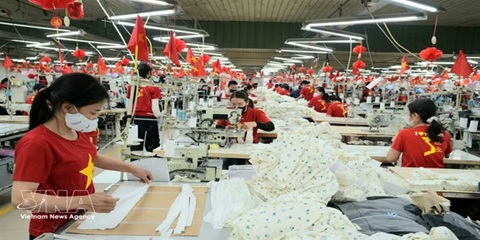
VIỆT NAM TARGETS $48 BILLION IN TEXTILE-GARMENT EXPORTS
Việt Nam’s textile and garment industry is facing both opportunities and challenges amid complex and unpredictable developments in the global market, prompting businesses to improve growth quality, optimise production costs and enhance adaptability in pursuit of an export turnover of about $48 billion this year. The target is considered an important milestone that requires concerted efforts from management agencies and the business community.
INFRASTRUCTURE / CONSTRUCTION / LOGISTIC / PORT
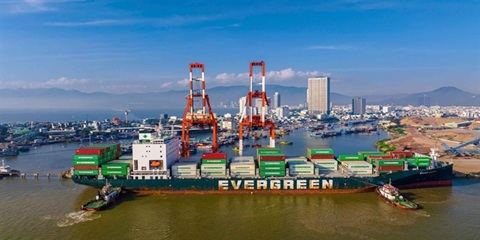
CUTTING LOGISTICS COSTS KEY TO BOOSTING EXPORTS
Reducing costs has become an increasingly urgent priority for import-export activities, particularly logistics costs, a conference in Hà Nội was told on Tuesday. According to Deputy General Director of the Ministry of Industry and Trade's Agency for Foreign Trade, Trần Thanh Hải, import-export activities has remained a bright spot for the economy in recent years, playing an important role and helping drive macroeconomic growth.
Events Sponsors






















